
Overview
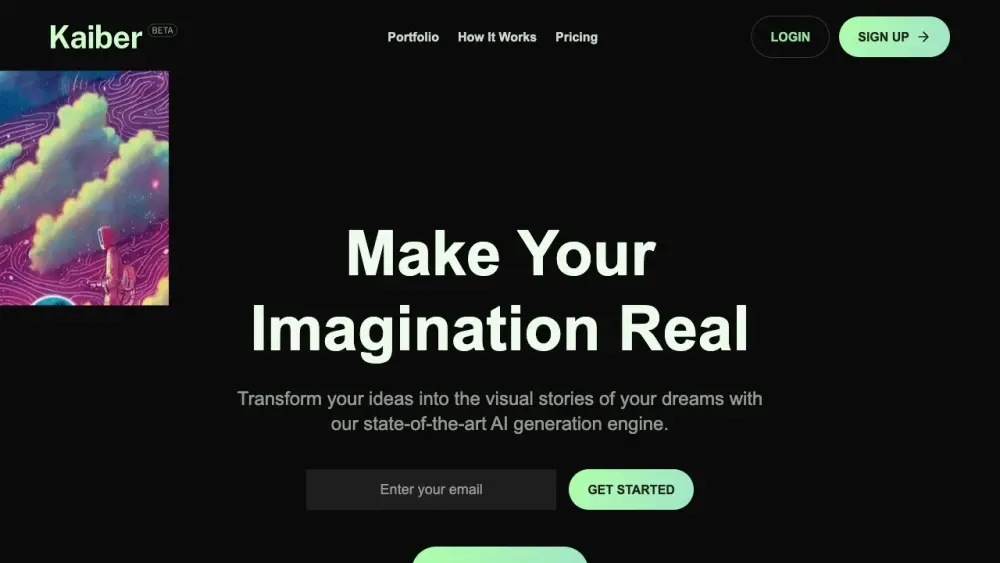
What if you could turn a simple idea or a static image into a stunning, flowing animation? Kaiber is an AI-powered creative engine designed specifically for this, transforming text prompts and uploaded images into dynamic videos and visual art. It moves beyond static image generation, offering artists and storytellers a tool to bring motion and narrative to their concepts effortlessly.
Key Features
- Text-to-Video Generation: Transform written descriptions into cohesive video sequences, interpreting narrative and mood to create moving visuals that align with the provided prompt.
- Image-to-Animation: Animate your own still images, artwork, or photographs, allowing you to add motion and life to pre-existing visual assets for a personalized touch.
- Multiple Visual Styles: Access a variety of pre-set artistic filters and modes, enabling the creation of videos that range from photorealistic to highly abstract and stylized.
- Customization Controls: Adjust motion intensity, camera movement, and style strength to fine-tune the output and achieve the exact creative vision for your project.
- Music Sync Capability: Integrate your own audio tracks to create videos where the visual motion and transitions can sync rhythmically with the beat of the music.
- High-Resolution Output: Generate videos in high definition, ensuring the final product is suitable for professional use on social media, websites, or digital displays.
- User-Friendly Interface: Navigate a clean and intuitive platform designed for creators of all skill levels, minimizing the technical learning curve for video production.
- Idea Inspiration Tools: Utilize built-in prompts and community galleries to spark new ideas and overcome creative blocks when starting a new project from scratch.
Pros
- Creative Empowerment: Democratizes video creation by allowing individuals without formal training or expensive software to produce compelling animated content.
- Rapid Prototyping: Drastically reduces the time from concept to initial visual draft, enabling quick iteration and exploration of different creative directions.
- Unique Aesthetic Output: Produces visually distinct and often surreal animations that are difficult to replicate with traditional animation or stock footage.
- Accessibility for Non-Artists: Provides a viable path for writers, musicians, and marketers to create custom visual content that aligns with their vision.
- Strong Community Focus: Offers a gallery for users to share and discover creations, fostering inspiration and showcasing the platform's diverse capabilities.
- Continuous Model Improvement: The underlying AI engine is regularly updated, leading to gradual improvements in video coherence, detail, and overall quality.
Cons
- Limited Precise Control: While offering customization, the AI may still introduce unexpected elements or motions, making exact frame-by-frame control impossible.
- Coherence Challenges: Longer videos can sometimes suffer from inconsistencies in character appearance, object permanence, or background details throughout the sequence.
- Processing Time: Generating videos, especially at higher quality settings, requires rendering time on the platform's servers, which can delay the creative workflow.
- Watermarks on Free Tier: Output from free trials or certain plans may include a Kaiber watermark, limiting immediate professional use without a paid subscription.
- Learning Curve for Effective Prompts: Crafting the perfect text prompt to achieve a desired result requires practice and understanding of how the AI interprets language.
Use Cases
- Music Video Production: Independent musicians and bands can generate unique, mood-fitting music videos directly from their song lyrics or album art, saving on production costs.
- Concept Art and Storyboarding: Game developers and filmmakers can quickly visualize scenes, characters, and environments to communicate ideas before committing to full production.
- Social Media Content: Digital marketers and content creators can produce an endless stream of eye-catching, original animated posts and short clips for platforms like TikTok and Instagram.
- Personalized Art Projects: Individuals can animate personal photos or create video gifts based on meaningful poems or quotes, resulting in highly personalized digital art.
- Educational and Explainer Content: Educators can create simple animated sequences to visualize abstract historical events, scientific concepts, or mathematical principles for students.
- Dream Journal Visualization: Individuals can use descriptive text from their dream journals to generate visual representations of their subconscious imagery and narratives.
Quick Start Guide
1. Sign up for an account on the Kaiber website. 2. Choose a generation mode (e.g., text-to-video) and input your prompt or upload a starting image. 3. Select a style and adjust any advanced settings like motion control. 4. Generate the video, review the output, and download your creation.
Conclusion
Kaiber stands out as a powerful and imaginative tool for anyone looking to venture into AI-generated motion graphics. Its greatest strength lies in translating abstract ideas into visual narratives, making it invaluable for rapid prototyping, music visualization, and unique social content. While it requires an understanding of its limitations regarding precise control and coherence, the creative possibilities it unlocks are significant. It is highly recommended for artists seeking inspiration, marketers needing volume content, and anyone curious about exploring the frontier of generative video. Start with a free trial to experiment with prompts and discover its potential for your projects.
Frequently Asked Questions
Video length limits are typically tied to your subscription plan. Free tiers often have very short limits, while paid plans can allow for longer sequences, sometimes up to 30 seconds or more per generation.
This depends on the specific terms of service and your subscription level. Most paid plans grant you a license to use the generated content for commercial use, but you must review Kaiber's licensing agreement to be certain.
As of now, Kaiber primarily operates through its web platform and mobile app. Public API access for integration into other applications is not widely advertised or available.
Kaiber often focuses on a more artistic and music-synced approach, with strong style filters. Others may prioritize different features like more precise editing controls or realism. The best choice depends on your specific creative needs.
Videos are typically exported in standard MP4 format. Resolution options are often available, with higher definitions (like 1080p) being a feature of premium subscription tiers.
Control is indirect. You can use parameters like 'motion strength' and camera direction (zoom, pan) hints in your prompt, but you cannot animate specific elements on a timeline with keyframes.
The number of generations or credits available is strictly defined by your chosen plan. Free trials offer a very limited number, while paid subscriptions provide a monthly allotment of credits.