

Overview
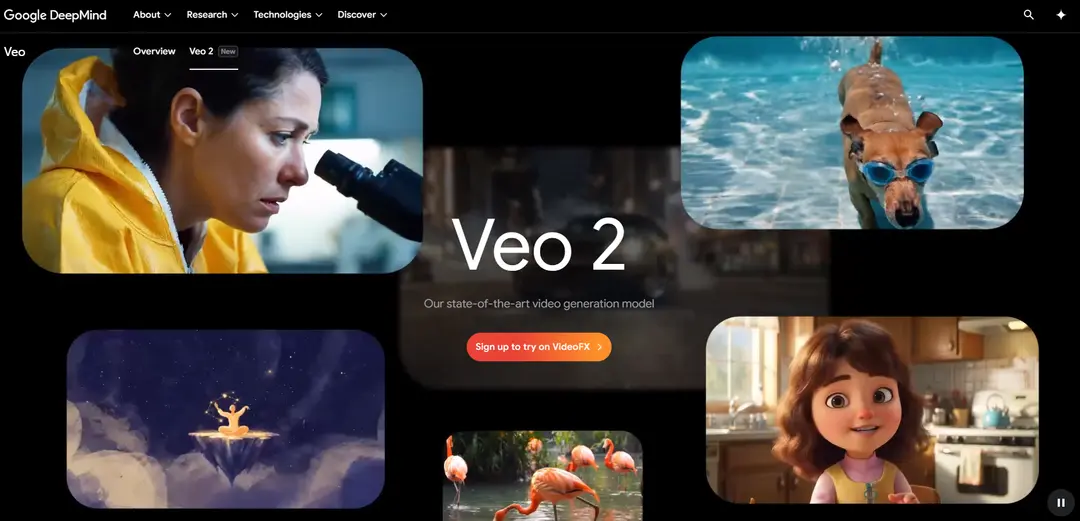
What if generating a high-quality, cinematic video was as simple as writing a paragraph? Google Veo 2, DeepMind's state-of-the-art AI model released in late 2024, makes this a reality. It transforms detailed text prompts into videos up to 4K resolution and two minutes long, featuring advanced physics simulation and unprecedented camera control, pushing the boundaries of AI-generated content.
Key Features
- 4K Resolution Output: Generates high-fidelity videos with exceptional clarity and detail, supporting professional-grade visual content suitable for large-screen viewing and high-resolution platforms.
- Extended Video Length: Creates continuous video sequences up to two minutes long, significantly surpassing the short clip limitations of most previous AI video generation models.
- Advanced Camera Control: Offers precise cinematographic direction through text, allowing specification of lens types, shot angles, camera movements, and stylistic framing for cinematic authenticity.
- Enhanced Physics Simulation: Demonstrates a markedly improved understanding of real-world physics, resulting in more believable motion, object interaction, and environmental dynamics.
- Reduced Hallucinations: Minimizes visual inconsistencies and illogical elements within generated scenes, providing more coherent and reliable outputs from complex prompts.
- Multi-Style Support: Capable of generating content across a vast spectrum of visual styles, from photorealistic scenes to various artistic and cinematic aesthetics as directed by the user.
- Text-to-Video Fidelity: Deeply understands and interprets complex textual descriptions, translating nuanced narrative and visual details into accurate on-screen action and scenery.
- Temporal Consistency: Maintains character and object identity, lighting, and style cohesively throughout the entire generated video sequence, avoiding flickering or morphing artifacts.
- Detailed Prompt Following: Excels at executing intricate instructions within a single prompt, including specific actions, environmental details, and emotional tone for the scene.
- Realistic Motion Generation: Produces natural and fluid movement for characters, animals, and objects, capturing the subtleties of motion that are often challenging for AI.
Pros
- Unprecedented Output Quality: Delivers near-professional cinematic quality with 4K resolution and sophisticated motion, setting a new benchmark for realism in AI-generated video.
- Superior Prompt Comprehension: Accurately interprets complex, multi-faceted text descriptions, reducing the need for numerous iterative generations to achieve the desired result.
- Professional Cinematography Tools: Provides filmmakers and creators with direct control over shot composition, a feature typically absent in consumer-level AI video tools.
- Extended Creative Freedom: The two-minute runtime allows for the creation of short scenes, music videos, or detailed product showcases without being constrained by brevity.
- Improved Coherence and Logic: Generates videos with fewer visual glitches and a stronger adherence to physical reality, making the content more believable and usable.
- Accessible Advanced Technology: Democratizes high-end video production, making powerful cinematic tools available to creators without large budgets or technical crews.
- Rapid Content Prototyping: Enables writers and directors to quickly visualize concepts and storyboards directly from a script, accelerating pre-production workflows.
- Strong Foundation for Future Updates: Being a DeepMind model, it represents a robust platform likely to see continuous and significant improvements in capability and accessibility.
Cons
- Limited Current Access: The primary interface, VideoFX, is waitlisted, creating a significant barrier to entry for most users who want to experiment with the technology.
- Restrictive Output on Available Platform: Even when accessed through VideoFX, videos are currently limited to 8 seconds and 720p, not reflecting the model's full 4K, 2-minute potential.
- Computationally Intensive: Generating high-resolution, long-form videos requires immense processing power, likely limiting real-time use and contributing to access restrictions.
- Watermarked Downloads: All videos downloaded from official channels include an invisible SynthID watermark, which may be undesirable for certain commercial or artistic applications.
- Complex Scene Challenges: While improved, generating highly intricate scenes with multiple precise character interactions or complex physics can still yield imperfect results.
- Potential for Traffic Diversion: Google's focus on other AI Studio features may slow down the public rollout and development focus dedicated specifically to Veo 2's accessibility.
- Unclear Long-Term Pricing Model: No definitive pricing or freemium structure has been announced, creating uncertainty for creators planning to integrate it into sustainable workflows.
Use Cases
- Independent Filmmaking: Pre-visualizing complex shots, creating placeholder scenes for editing, or generating entire segments for animated short films and music videos.
- Storyboarding and Concept Art: Rapidly bringing written scripts and ideas to life in motion, allowing writers and directors to share and refine visual concepts with teams and clients.
- Advertising and Product Marketing: Creating dynamic, high-quality promotional videos for products or services directly from a description, reducing production costs and time.
- Educational Content Creation: Generating accurate historical reenactments, scientific visualizations, or animated explanations of complex concepts for engaging learning materials.
- Social Media Content Production: Empowering influencers and brands to produce a high volume of unique, stylized video content quickly for platforms like TikTok, Instagram, and YouTube.
- Game Development Prototyping: Creating initial concept videos, environmental mood pieces, or character animation tests to establish visual style and narrative tone before full production.
- Architectural Visualization: Generating fly-through videos of building designs or interior spaces based on textual descriptions of materials, lighting, and spatial layout.
- Creative Experimentation: Allowing artists and visual designers to explore new aesthetic styles and visual narratives without the need for traditional filming or animation skills.
Pricing & Plans
As a newly released and highly advanced model, Google Veo 2's long-term pricing structure is not yet publicly defined. It is currently accessible through a waitlisted free trial on Google's VideoFX platform. Based on similar Google AI services, a future model may involve a freemium tier with limited generations or resolution, complemented by a paid subscription or credit-based system for full access to 4K, extended-length outputs.
Quick Start Guide
1. Join the Waitlist: Visit labs.google/videofx to request access to VideoFX, the interface for Veo 2. Await approval via email. 2. Craft a Detailed Prompt: Once access is granted, compose a comprehensive text description including subject, action, style, camera angles, and lighting. 3. Generate and Refine: Submit your prompt to create an initial video. Analyze the result and iteratively refine your prompt to improve accuracy. 4. Download: Export your final video, which will include an invisible SynthID watermark denoting it as AI-generated.
Conclusion
Google Veo 2 is a monumental leap in AI video generation, fundamentally changing the accessibility of high-fidelity cinematic creation. Its strengths in resolution, duration, and camera control are undeniable, positioning it as a leader in the field. However, its current limited availability through a waitlisted platform means its transformative potential is not yet fully realized for the broader public. For those who gain access, it is an incredibly powerful tool for prototyping, content creation, and artistic exploration. Recommendations: 1) Join the waitlist to secure a place in line for access. 2) In the meantime, study detailed prompt engineering techniques to be prepared. 3) Consider its current limitations for commercial projects until full access and a clear pricing model are established. Veo 2 is less of a readily available tool and more a compelling preview of the imminent future of content creation.
Frequently Asked Questions
Currently, access is granted through a free trial on the waitlisted VideoFX platform. Google has not announced a definitive long-term pricing model, but it will likely transition to a freemium or paid subscription structure for full capabilities.
Despite Veo 2's technical capability for 4K and 2-minute videos, the current VideoFX interface limits outputs to 8 seconds in length and 720p resolution. These limits are expected to increase as the platform evolves.
You must join the waitlist for Google's VideoFX platform at labs.google/videofx. Access is granted gradually by Google, and there is no public timeline for widespread availability.
You should carefully review Google's Terms of Service for VideoFX and Veo 2 once you gain access. Be aware that all downloads currently include an invisible watermark, which may need to be considered for commercial use.
Veo 2 is considered a state-of-the-art model, particularly noted for its high 4K resolution output, extended two-minute length, and advanced camera control features, which together often surpass the capabilities of other available models.
It is an invisible digital watermark embedded by Google into AI-generated content to identify its origin. It is designed to be resilient to modifications and is part of a initiative for responsible AI development and content authentication.
The provided data focuses on its text-to-video generation capabilities. Features like video inpainting or extension might be part of its development but are not explicitly detailed in the available information.
As a cloud-based model running on Google's servers, you do not need powerful local hardware. Access and generation are performed through a web browser on Google AI Studio or VideoFX, requiring only a stable internet connection.