

Overview
While many AI models specialize in text or images, Alibaba Cloud's Qwen (Tongyi Qianwen) is a comprehensive model family that integrates language, vision, and audio processing into a single, accessible platform. It's designed as a multi-purpose tool for both creative and analytical tasks, offering an all-in-one web interface for users who need more than just a standard chatbot. Despite facing stiff competition and a recent decline in traffic for its older versions, the platform continues to evolve with advanced iterations like Qwen 2.5.
Key Features
- Multimodal Processing: Capable of understanding and generating diverse content types including text, images, videos, and audio through integrated vision-language models for a unified creative and analytical experience.
- Long Context Understanding: Supports processing of extensive contexts up to 128,000 tokens, enabling deep analysis of large documents, lengthy codebases, and complex research materials.
- Multilingual Support: Handles 29 different languages, including English, Chinese, Spanish, French, and Japanese, making it a viable tool for global communication and content creation.
- Chatbot Functionality: Provides advanced conversational AI capabilities for building interactive assistants, customer service bots, and engaging dialogue systems.
- Image and Video Generation: Offers integrated tools for creating visual content from textual descriptions, supporting both static images and dynamic video generation.
- Document Processing: Excels at analyzing, summarizing, and extracting key information from uploaded documents, including PDFs, Word files, and other text formats.
- Web Search Integration: Augments its responses with real-time information retrieved from the web, ensuring answers are current and factually grounded when needed.
- Code Assistance: Provides robust support for code generation, explanation, debugging, and completion across multiple programming languages, aiding developers.
- Tool Utilization: Can call upon and interact with external tools and APIs, expanding its functionality beyond its native capabilities for complex task automation.
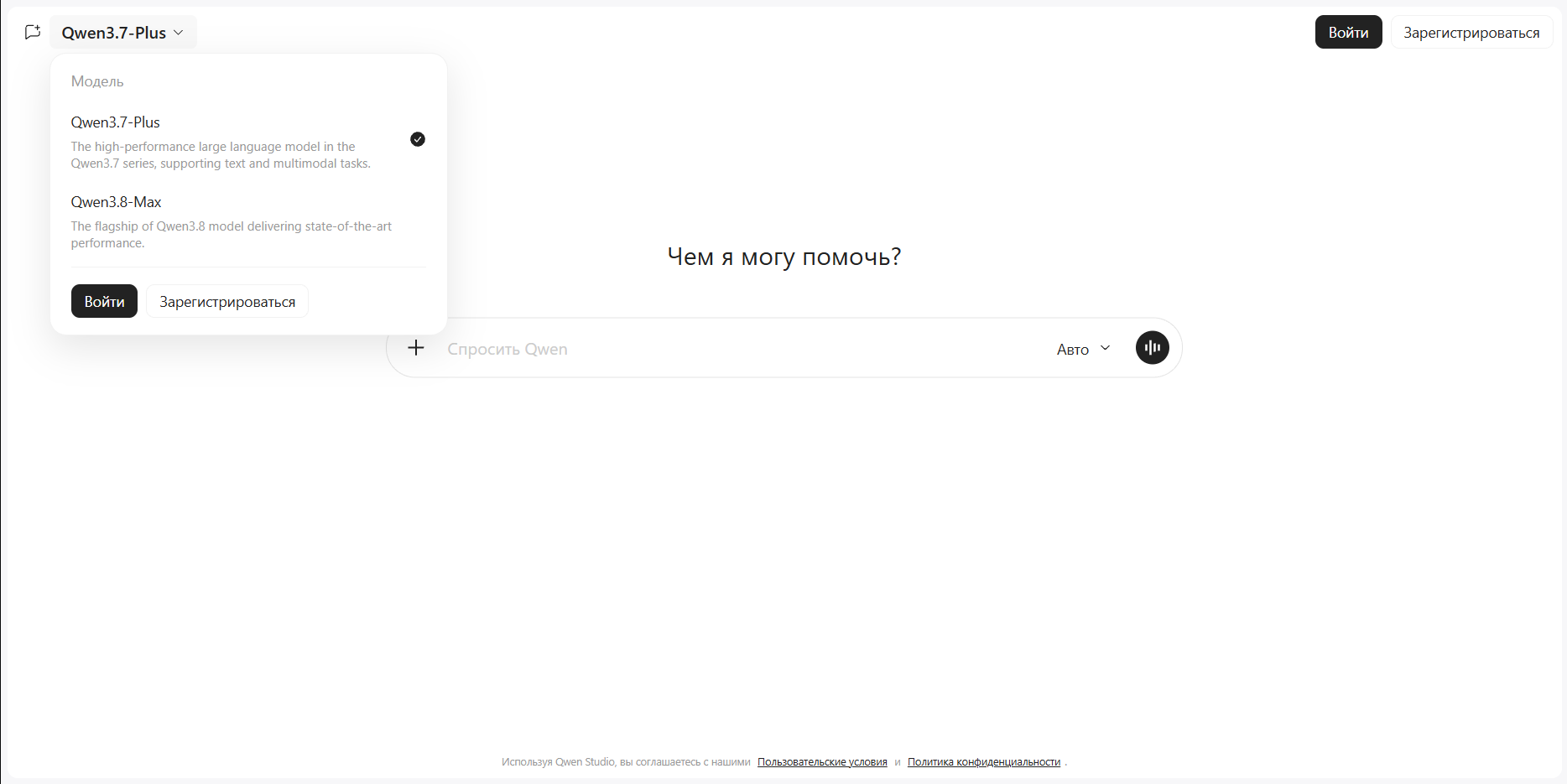
- Accessible Web Interface: Delivers its powerful features through a user-friendly web portal (Qwen Chat), requiring no complex setup or local installation for most users.
- Model Variety: Offers a family of models including Qwen 2.5 Plus, Max, and specialized variants, allowing users to choose the right balance of power and cost for their task.
- Audio Content Handling: Extends its multimodal reach to include audio, capable of working with sound-based inputs and outputs for a fully sensory AI experience.
Pros
- Comprehensive Feature Set: Integrates text, image, video, and audio capabilities into a single platform, reducing the need to switch between different specialized AI tools.
- Massive Context Window: The 128k token support is exceptional for working with very long documents, books, or complex code files without losing coherence.
- Strong Multilingual Performance: Its support for 29 languages is robust, offering high-quality outputs for non-English languages, particularly Chinese, which is a significant advantage.
- No-Cost Access: The primary web interface, Qwen Chat, offers free access to its capabilities, providing a powerful tool without immediate financial commitment.
- User-Friendly Interface: The web portal is designed for ease of use, allowing both technical and non-technical users to quickly start generating content and getting answers.
- Open-Source Availability: Many models in the Qwen family are open-sourced, fostering transparency, community development, and potential for self-hosted deployments.
- Integrated Web Search: The ability to pull in live information from the internet directly within the chat enhances the accuracy and timeliness of its responses.
- Advanced Code Support: It is a capable programming assistant, useful for generating snippets, explaining complex code, and helping with debugging across various languages.
Cons
- Intense Market Competition: Faces formidable competition from other leading models like GPT-5, which can often lead to faster innovation and more features elsewhere.
- Traffic and Update Concerns: Data suggests a significant traffic decline, potentially indicating slower update cycles or user migration to newer platforms like Qwen3.
- Potential Performance Gaps: While capable, some specialized benchmarks may show performance differences compared to the absolute top-tier models in specific tasks.
- Proprietary Elements: While some models are open-source, the most advanced versions (e.g., Qwen 2.5 Max) are likely proprietary and may come with usage restrictions.
- Regional Bias in Data: The training data likely has a stronger representation of certain languages and regions, which could lead to biases in outputs for other cultures.
- Dependence on Alibaba Cloud: As a product of a major tech conglomerate, its development roadmap and data policies are tied to the parent company's strategic decisions.
- Variable Output Quality: As with all LLMs, the quality of generated content, especially for creative tasks, can be inconsistent and may require human review and editing.
Use Cases
- Content Creation and Marketing: Generating articles, blog posts, social media content, and accompanying marketing images or video concepts from a single prompt.
- Multilingual Customer Support: Powering chatbots and support systems that can understand and respond to customer queries accurately in multiple languages.
- Research and Document Analysis: Processing and summarizing large volumes of text, such as legal documents, academic papers, or business reports, using its long-context capability.
- Software Development Assistance: Aiding developers by generating code snippets, debugging errors, explaining complex algorithms, and documenting existing codebases.
- Education and Learning: Serving as a tutoring tool that can explain concepts, generate practice problems, and create educational materials in various subjects and languages.
- Creative Design and Storytelling: Brainstorming ideas, writing scripts, developing characters, and generating visual concepts for stories, games, and video projects.
- Data Interpretation and Reporting: Analyzing datasets by processing textual descriptions, generating summaries of findings, and creating reports on insights.
- Personal Productivity: Assisting with everyday tasks like drafting emails, planning itineraries, translating languages, and getting answers to complex questions via web search.
Pricing & Plans
Qwen operates primarily on a freemium model. The standard web interface, Qwen Chat, provides free access to its capabilities, though it may have usage limits or queue times. For higher volumes, enhanced performance, and access to the most advanced models like Qwen 2.5-Max, Alibaba Cloud likely offers paid subscription plans or API credits through its cloud platform. Specific pricing tiers are not detailed in the provided data but typically scale with compute usage and model selection.
Quick Start Guide
1. Visit the official Qwen Chat website (https://chat.qwenlm.ai/). 2. Start a new chat session—no account is required for basic use. 3. Type your query or prompt into the chat interface. You can ask for text generation, request an image, or upload a document. 4. Use the menu options to access additional features like web search toggle, image generation, or code artifacts for more complex tasks.
Conclusion
Qwen stands out as a formidable and highly versatile contender in the AI landscape, particularly praised for its true multimodal integration and massive context window. Its strength in handling multiple languages and its combination of generative and analytical tools in one place make it an excellent all-in-one solution for users seeking more than just a text-based chatbot. However, its position is challenged by intense competition and the rapid pace of innovation. It is highly recommended for users who need strong multilingual support, especially for Chinese, and for those who value an integrated approach to AI tasks involving text, images, and data. For those focused solely on the absolute cutting-edge English-language performance, comparing it with other leading models is advised. Start with the free tier to assess its fit for your specific workflow.
Frequently Asked Questions
Yes, the primary web interface at chat.qwenlm.ai offers free access to its AI capabilities. However, for heavy usage or access to the most powerful models like Qwen 2.5-Max, paid plans through Alibaba Cloud are likely available.
Qwen refers to the overall family of models. Qwen3 is the newer generation released by Alibaba Cloud, featuring advanced capabilities and performance improvements. The traffic decline for 'Qwen' likely refers to users migrating from older versions to the newer Qwen3.
Qwen supports 29 languages, including English, Chinese, Spanish, French, Japanese, and Korean. Its performance is particularly noted for being strong in Chinese alongside English.
Yes, Qwen is a multimodal model. Beyond text, it has integrated capabilities for generating images and videos from textual descriptions directly within its chat interface.
Qwen models support a context window of up to 128,000 tokens. This allows it to process and understand very long documents, books, or code files in a single session.
Yes, Alibaba Cloud provides API access to the Qwen models, allowing developers to integrate its capabilities into their own applications, software, and services. Access is typically managed through the Alibaba Cloud platform.
Absolutely. Qwen includes robust code assistance features. It can generate code snippets, explain programming concepts, debug errors, and complete code across multiple languages, making it a useful tool for developers.
Qwen has an integrated web search feature that you can toggle on. When enabled, the model will retrieve and incorporate information from the live internet into its responses, providing more current and factual answers.
You should review Alibaba Cloud's privacy policy for specifics. As with any cloud-based AI service, assume that inputs may be used to improve the model. For highly sensitive data, using self-hosted open-source variants of Qwen would be more appropriate.